1 People Follow
Designing a Living City
Chicago Humanities Festival presents
About
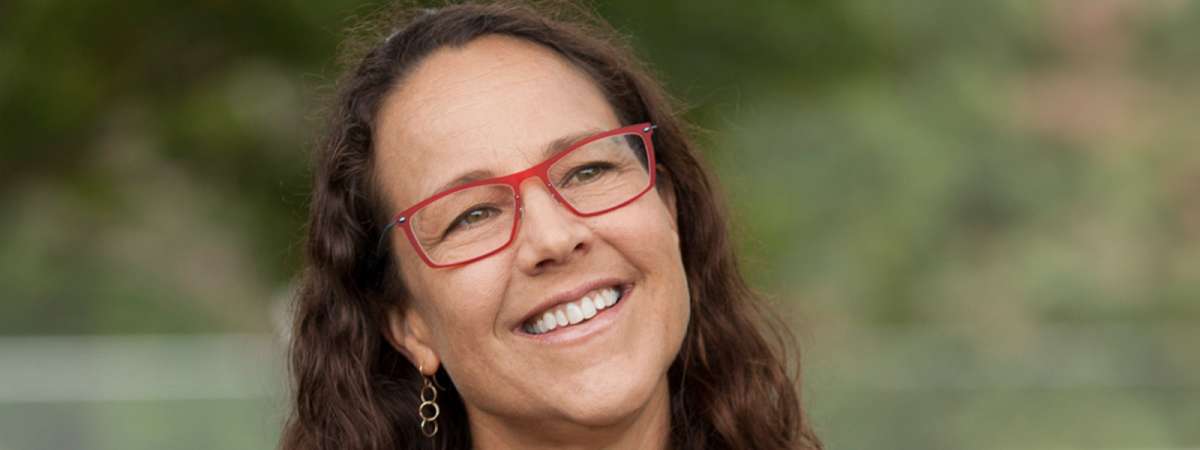
Landscape architect Heidi Natura just finished working on the newly opened Obama Presidential Center. She’s also contributed to projects that have transformed Chicago’s waterways, including our beloved Lakefront. Natura joins us for a conversation on designing landscapes that bring people together, helping us to answer the question: How do we create public spaces that both restore ecosystems and strengthen civic life?
This program is generously underwritten by the Richard H. Driehaus Foundation and is presented in partnership with the University of Chicago Division of the Arts & Humanities.
Raised in rural Dane County Wisconsin, Heidi was immersed in the outdoors from a young age and came to love the farmstead, woodland, savanna, prairie, and wetland landscapes all around her. Her childhood home was situated atop the last glacier’s terminal moraine (where the glacier physically stopped advancing and dropped all its sand, gravels and boulders as it melted), draped across a dramatic and varied topography. Her father involved Heidi in her first prescribed burn (of many) across old pasture/remnant prairie acres when she was 12 years old. She used this rural homestead to begin to learn the plants and animals native to southern Wisconsin and the Greater Midwest. Both parents had professional training in the arts (architecture and painting), which also heavily influenced a world view that continues to center on creativity and tapping unrealized potential. Heidi attended the University of Wisconsin – Madison and in 1990 received her Bachelor of Science in Landscape Architecture, which offered a big umbrella to explore all these related interests as part of her professional practice.
Beginning in her first days as a professional, Heidi has been actively involved in promoting the wise use of our natural resources through her planning and design work. As a registered landscape architect and Fellow of the American Society of Landscape Architects, Heidi takes particular pride in elevating the profession of landscape architecture to its highest potential of expression. It is her responsibility and mission as the leader of Living Habitats to understand and creatively express the needs and wants of humanity on the land, balanced with the needs and limitations of the earth and its many inhabitants. She is eager to work with individuals and organizations who are involved with projects that both directly and indirectly shape our world. It is her feeling that with every project undertaken, together with an application of creative thought, we can begin to meaningfully address the many environmental challenges we collectively face today.
As Principal & CEO, Heidi oversees all of Living Habitats’ project work and enjoys participating in every phase of a project, as well as working directly with clients. With her experience and strong skills in facilitating both small-scale and large-scale projects, she can help clients with projects of all sizes to understand and articulate beauty, functional integrity, and environmental improvement by way of their decisions and actions. Special focus areas for Heidi have been the integration of native flora in built and natural landscapes, green roofs, and shoreline restoration design work. Her projects combine natural and structural elements in artful ways, creating aesthetically pleasing and ecologically rich solutions. Since founding Living Habitats, Heidi has been able to realize her vision for integrating landscape and ecology with custom art elements that enhance the beauty and meaning of the work generated. The custom artwork service often intrigues people, as it is sometimes not immediately apparent how it relates to the land. Beyond creating actual two- and three-dimensional works of art, landscape architecture can be considered a form of installation art, working with the media of living and non-living matter to create beautiful places that are focused on improving the condition of our world by being adaptable and highly functional.